


Facial Hair Restoration
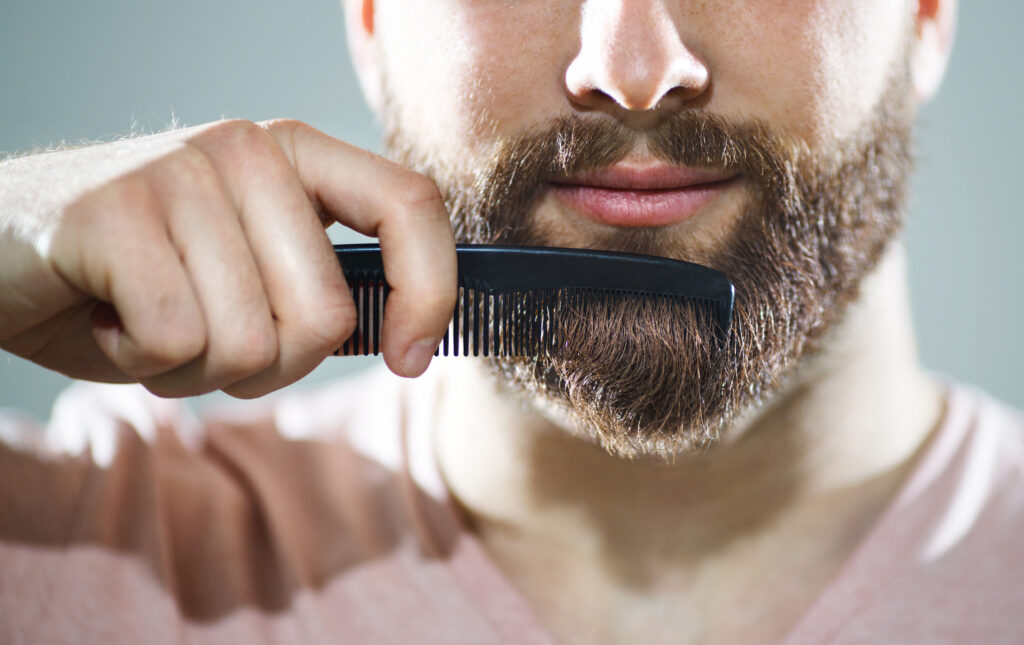
What Beard and Mustache Transplantation?
Many men who do not have the desired beard and mustache density seek many methods to change this situation. Generally, cosmetic procedures, oils or cures are at the forefront of these methods. However, if the person has problems such as general beard loss or regional shedding, these solutions do not achieve the desired beard image.
A good beard and mustache are a source of confidence for many men, highlighting their masculine features and hiding unwanted cheek or chin proportions. Most men want a thick beard that gives their face a unique shape, but not everyone can grow a natural full beard.
Scars, genetic predispositions and damaged hormones affect facial hair growth. For these reasons, natural beard hairs are often sparse than one’s desires. A sparse or untidy beard can cause a serious loss of self-confidence, as most men believe their beard determines their masculine appeal.
Beard and mustache cultivation effectively does what your genetics or hormones do not allow, allowing you to have a full and thick beard. In the beard transplant process, if the area to be transplanted is larger than the lower jaw area or if there are more empty spots, hair is taken from the donor area at the back of the head. With the developments in technology, beard transplantation has become very effective and sensitive. Today, the most accurate method for those looking for a permanent solution is beard transplantation and mustache transplantation.
To Whom Is It Applied?
The basic explanation of beard transplantation is to make the beardless parts bearded by planting hair follicles. The procedures applied in beard transplantation are generally similar to the procedures applied in hair transplantation. Because they are similar applications with the same purpose and aesthetic procedure.
It is possible for anyone who needs help with beard transplantation to choose. It stands out as it is a practice that is widely preferred by men. In general, beard transplantation is applied to the following people:
- – Those with asymmetric beards.
- – Those who have a sparse and hollow beard structure.
- – People who do not have a beard due to hormonal reasons.
- – Transgender people.
- – Those who have burns, scars, scars and similar images in the beard area for any reason.
Beard and Mustache Transplantation Techniques
Follicular Unit Extraction (FUE) and Direct Hair Transplantation (DHI) are techniques used for beard and mustache transplantation. They are the most advanced techniques that offer high precision in the placement of grafts. Beard and mustache transplantation is a relatively quick procedure that requires only a few hours, depending on the number of grafts to be transplanted, and is relatively quick compared to hair transplantation.
Within the scope of this procedure, the patient is given local anesthesia. Hair grafts are taken from the donor area of the scalp or the lower jaw area according to the number of grafts planned for the person. The grafts taken are planted in the mustache or beard areas. Patients are given a guide about the whole process at the first consultation.
Dr. Ozcan and his expert team will give you detailed information about the technique, a detailed plan and estimated number of grafts to be tr.
Free Consultation
Thinking about hair treatment options possible for you?
You can get a Free Online Consultation session with our professional team right now!
What is Eyebrow Transplantation?
One of the most important elements that emphasize the beauty of the face is the eyebrows. If the shape and thickness of the eyebrows are compatible with the face, a more meaningful, lively and youthful expression will be supported. Since the eyebrow area, which is the most striking place on your face, is the feature that indicates our expression, you should try to make the right decision by doing extensive research when considering eyebrow transplant design. Eyebrow shapes: In history, it has changed according to fashion and the perception of beauty. While thin, indistinct eyebrows have been admired and applied in the past, more natural, thick-looking eyebrows have been preferred and appreciated recently. Today, eyebrow transplantation operations are one of the methods that provide the most natural appearance in order to thicken thin eyebrows and create the shape we want. Eyebrow transplant operations: It is preferred by women both because it provides a natural appearance and because it is permanent for a lifetime. Eyebrow transplantation is performed with the same techniques as in hair transplantation.
Your eyebrows may stop growing for many reasons. Plucking the eyebrows too much can damage the hair follicles. Gaps may occur between the eyebrows or bald spots may appear. In addition, repeated application of permanent make-up may cause scar formation. Where scar tissue forms on the skin, the hairs may not grow back.
Your eyebrows can be damaged by burns, severe blows and injuries. Your weak eyebrow growth may be a genetic problem. Skin infections or some disease treatments can also cause eyebrow loss. If your eyebrows do not grow enough and this negatively affects your self-confidence, you can get rid of this problem by having eyebrow transplantation in our clinic.
How Is Eyebrow Transplantation Performed?
Eyebrow transplantation, Follicular Unit Extraction, just like hair transplantation
Transplantation is performed with FUE and Direct Hair Transplantation (DHI) techniques.
– In the first phase of the operation, Eyebrow design and planning is done by Dr. Ozcan. After the most natural design and planning suitable for the patient’s facial patients, a rectangular area (a small area that will provide sufficient root removal for eyebrow transplantation) is shaved from the patient’s donor area (the area between the two ears at the back of the head). Since a small rectangular area is shaved, the patient can easily return to their social life when the patient opens their hair after the operation, as the hair will cover this area. Unlike hair transplantation, there is no need to cut all the hair in this process.
– Since the procedure is performed under local anesthesia, anesthesia is applied at this stage.
– The grafts (hair follicles) from the shaved donor area are collected one by one and kept in a special solution to preserve their vitality. The rooting phase is completed.
– When the collection of the roots is completed, channels (holes) are opened one by one in the eyebrow area to be transplanted, remaining within the planned eyebrow drawing, and the roots (grafts) that are kept in a special solution are carefully placed one by one. Considering the direction of the patient’s existing eyebrows, a natural look is easily achieved as a placement process is performed in the same direction.
– After the roots are placed, Detailed information is given by Dr. Ozcan about the issues to be considered after the operation and the use of drugs after the operation.
Eyebrow transplant operation may take 2-4 hours depending on the graft needs of the person.
Since the eyebrows are one of the most important areas of the face, transplantation should be done very carefully, based on the shape of the face and patient requests. Dr. Ozcan and his expert team will solve your eyebrow problem in the most natural and quality way.
Things to Consider After Eyebrow Transplantation
After transplantation, slight redness and crusting are seen in the eyebrow area. One of the most important points to be considered after eyebrow transplantation is not to interfere with these crusts.
Contact with water should be avoided on the first day, and it should be protected against trauma. Care should be taken as the eyebrows planted in the first days will be sensitive and prone to shedding.
After the first planting, the eyebrows may be weak, this is normal. Eyebrows will look much thicker and natural over time. It may take 8-12 months for the eyebrow to take its full shape after transplantation. As the transplanted eyebrow enters the natural lengthening process, it will have a very natural appearance.
New eyebrows begin to grow within 3 months after transplantation, and the desired eyebrow density can be reached within 8 months. In this process, you should act according to Dr. Ozcan’s instructions and do not neglect your eyebrow care.
Transaction Fees
In order to determine the planting fees, some actions must be taken first before giving the price information. First, an examination is done by Dr. Ozcan. By making the necessary examinations, factors such as which method to transplant and how many hair follicles will be used are determined.
Then the person is presented with a price offer. When you come to our hair transplant center to be examined for transplant procedures, you can get a price quote after the analysis. By choosing to have your problem areas treated at Ozhair Hair Transplantation Center, you can be sure that you will get rid of your problems in this area.
